Mathematical Statistics and Data Science
We study mathematical methods and models for analyzing and representing data. Our research combines probability theory and stochastic processes with abstract and linear algebra to understand uncertainty, randomness, and the structure of statistical models.
Members
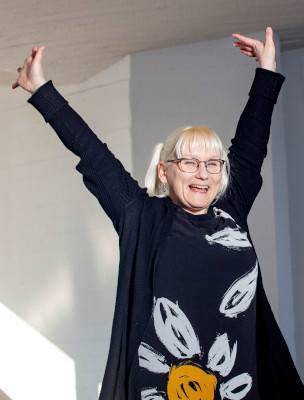 |
Pauliina Ilmonen
Professor
Multivariate extreme values, functional data analysis, cancer epidemiology |
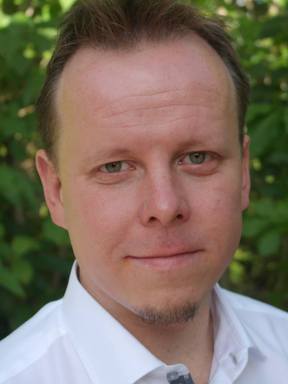 |
Lasse Leskelä
Professor
Mathematical statistics, probability theory, network analysis |
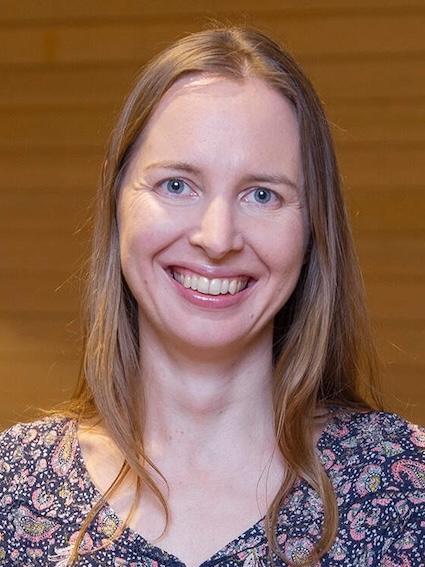 |
Kaie Kubjas
Associate Professor
Algebraic statistics |
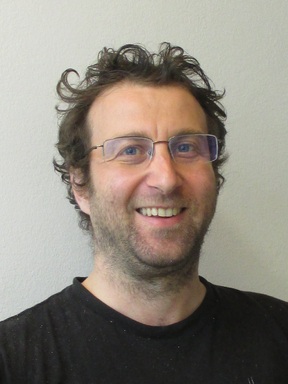 |
Vanni Noferini
Associate Professor
Network analysis, random matrix theory |
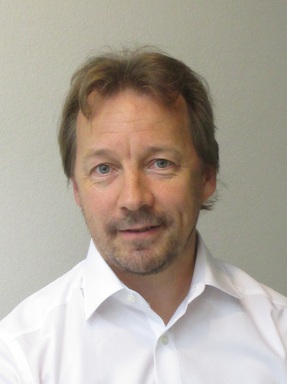 |
Jukka Kohonen
Senior University Lecturer
Statistics, combinatorics |
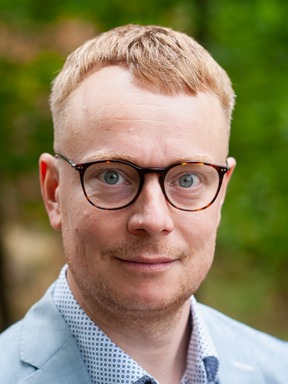 |
Jonas Tölle
Senior University Lecturer
Stochastic analysis, stochastic dynamics, stochastic processes |
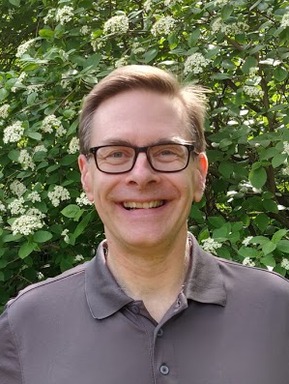 |
Pekka Pere
University Lecturer
Statistics |
See the complete list of current members and alumni.
Projects and networks
- SHiNe - Statistical Theory for High-Dimensional Structured Network Models 2026–2030
- FiRST – Finnish Centre of Excellence in Randomness and Structures, 2022–2029
- More...
Selected publications
- L Leskelä, M Zhukov. Sharp constants relating the sub-Gaussian norm and the sub-Gaussian parameter. Electronic Communications in Probability 2026.
-
- F Arrigo, DJ Higham, V Noferini, R Wood. Weighted enumeration of nonbacktracking walks on weighted graphs. SIAM Journal on Matrix Analysis and Applications 2024.
- M Hinz, JM Tölle and L Viitasaari. Variability of paths and differential equations with BV-coefficients. Annales de l’Institut Henri Poincaré - Probabilités et Statistiques 2023.
- A Belyaeva, K Kubjas, LJ Sun, C Uhler. Identifying 3D genome organization in diploid organisms via Euclidean distance geometry. SIAM Journal on Mathematics of Data Science 2022.
- J Alho, E Arjas, J Karvanen, L Leskelä, E Läärä, P Pere. Tilastotieteen sanasto. Suomen Tilastoseura 2023.
A complete publication list for all group members is available in the Aalto research database.
News and events
Upcoming seminars
Join stochastics-finland@list.aalto.fi for announcements on probability and statistics in Finland.
Teaching
We teach courses in probability and statistics at all levels. Some of the offered courses are eligible as a basis for an SHV degree in insurance mathematics. Doctoral education in probability and statistics is coordinated by the Finnish Doctoral Education Network in Stochastics and Statistics (FDNSS).
Page content by: webmaster-math [at] list [dot] aalto [dot] fi

